
Rummy Ares Withdrawal Time
Understanding Withdrawal Time on Rummy Ares
When users search for withdrawal time, they usually want one clear answer: how long it may take to receive funds after requesting a payout. This is one of the most important topics for any gaming platform because payment speed affects trust, convenience, and the overall user experience. For many Indian players, a smooth withdrawal process matters just as much as game variety or promotions.
Withdrawal time is rarely based on one factor alone. It usually depends on account verification, selected payment method, internal review systems, request timing, banking schedules, and whether the account needs additional checks. Because several steps can be involved, users benefit from understanding the full process rather than expecting every request to move at the same speed.
Some withdrawals are processed quickly when account details are already verified and no unusual activity is detected. Others may take longer if documents are missing, information needs confirmation, or the chosen payment route has its own banking timeline. Knowing these differences helps users set realistic expectations.
For new users, one of the first practical questions after registration is often related to deposits and payouts. They may complete sign up steps quickly, but later discover that withdrawals require account confirmation. This is common across many online platforms and should be viewed as part of standard operational procedure rather than a surprise.
A clear platform usually explains the payout journey through wallet pages, status updates, or help sections. When users understand what stage their request is in, the experience feels smoother even if processing still takes some time. Transparency reduces uncertainty.
Indian users often access platforms through mobile devices, which makes wallet simplicity even more important. Fast navigation, readable status messages, and clear payment history help players stay informed without needing to contact support for every question.
Another important point is accuracy. Fast processing is valuable, but correct processing is essential. A reliable system balances speed with checks that help prevent errors, duplicate requests, or unauthorized activity. Good withdrawal systems aim to do both.
Main Factors That Can Affect Withdrawal Time
| Factor | How It Affects Time | Player Benefit |
|---|---|---|
| Verification Status | Approved accounts may process faster | Less delay |
| Payment Method | Some methods settle quicker than others | Better planning |
| Internal Review | Security checks can add time | Safer transactions |
| Request Volume | Busy periods may slow queues | Realistic expectations |
| Bank Timelines | External systems may affect delivery | Clearer understanding |
Many users focus only on the final transfer, but the earlier steps matter too. If profile details are complete and documents are ready, the process often feels easier. If users wait until the moment of withdrawal to verify everything, delays become more likely.
A smart habit is to review account details before requesting a payout. Confirm your name, payment details, and any required documents in advance. Small preparation steps can save time later.
Why Status Updates Matter
One of the most helpful features in any wallet system is status visibility. Users usually feel more comfortable when they can see whether a request is pending, under review, approved, or completed. Without updates, even normal processing times can feel uncertain.
Well-managed platforms often improve user confidence through better notifications, cleaner wallet dashboards, and easier access to transaction history. These features may seem simple, but they significantly improve the payout experience.
Speed vs Security Balance
Every platform faces the same challenge: users want speed, while the business must protect accounts and payment systems. The best solution is balance. Fast systems with no checks can create risk. Heavy checks on every request can create frustration. Strong operators aim for efficient verification and targeted reviews only when needed.
This is why some withdrawals move quickly while others take longer. Different requests may trigger different checks depending on account history or transaction patterns.
Some players first join for tournaments, card tables, or entertainment categories such as Slots content. Others focus mainly on practical topics like deposits and withdrawals. Whatever brings users to the platform, payout clarity often becomes one of the most important long-term factors.
Understanding the process helps users avoid confusion and manage expectations more effectively.
Withdrawal Requests and the Steps Behind Processing
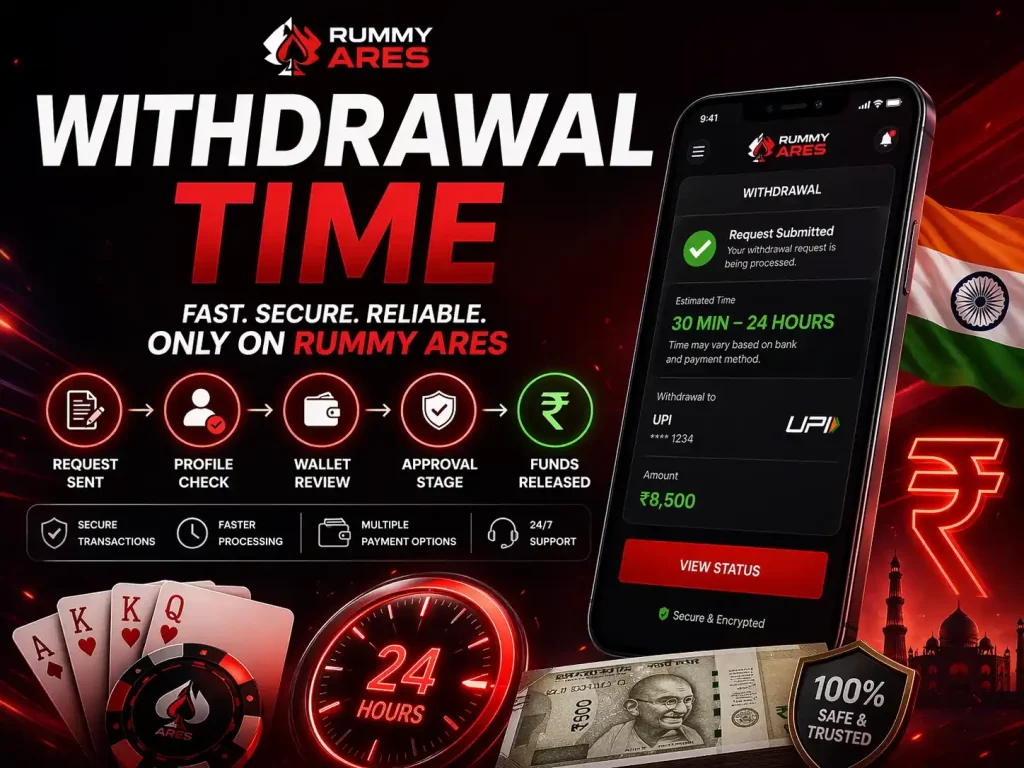
After a player submits a withdrawal request, the process usually moves through several internal stages before funds are released. Even when the user sees only a single button press on the screen, the platform often checks account details, wallet balance, transaction records, request formatting, and payment routing before marking the request as complete.
This process becomes easier to understand when each stage is viewed separately. Players often assume withdrawals are delayed for one single reason, but in reality the timing can be shaped by several small checkpoints working together. These checkpoints are meant to confirm that the payout is going to the correct destination, that the account details are consistent, and that the request matches platform rules.
For Indian users, this is especially relevant because many players use mobile wallets, banking tools, and device-based access throughout the day. A platform that explains the payout path clearly helps reduce confusion and makes the experience feel more predictable.
Another important detail is that not all delays are negative signs. Some are simply routine reviews. If the platform checks identity details, verifies recent changes, or confirms payout eligibility, that extra time may be part of ordinary transaction control. The key issue is whether the process feels understandable and whether the user can track progress without guessing.
Common Stages in a Withdrawal Request
| Withdrawal Stage | What Happens | Why It Matters |
|---|---|---|
| Request Submission | User confirms payout amount and payment route | Starts the transaction flow |
| Account Check | System reviews profile status and access details | Helps confirm account consistency |
| Balance Review | Wallet values and eligible funds are checked | Prevents request errors |
| Security Review | Platform checks for unusual activity if needed | Protects the payout process |
| Release and Transfer | Funds move to the selected route after approval | Completes the request |
A request usually feels fastest when all account details are already in order before the user reaches the withdrawal page. If the name, profile information, wallet route, and account status are already aligned, fewer extra checks may be needed. This is why preparation often matters as much as the request itself.
Many users only think about withdrawals when they are ready to cash out, but a better habit is to review the account earlier. Checking profile information in advance can reduce unnecessary waiting later. Even simple steps such as confirming personal details and reading wallet instructions can improve the overall experience.
Why Timing Can Change From One Request to Another
Players sometimes compare one payout with another and wonder why the timing is not identical. This happens because each request may enter the system under different conditions. One user may already have a fully settled account with no recent edits, while another may have changed a payment detail recently or may be making a larger request that requires additional review.
Timing can also vary depending on the hour a request is placed. Some requests are submitted during high traffic periods, some during support hours, and some just before banking cutoffs. These operational differences can create noticeable variation even on the same platform.
Another factor is user history. Returning users with stable account patterns may sometimes experience smoother processing than brand-new accounts. That is not unusual. Many digital platforms use history and consistency as part of their review logic.
Practical Habits That Can Help Reduce Delay
Players who want a smoother payout experience often benefit from a few simple habits:
- Review wallet instructions before sending the request
- Keep account details consistent
- Avoid unnecessary profile changes before withdrawal
- Check whether verification steps are already complete
- Confirm the selected payment route carefully
- Read status messages instead of submitting repeat requests
These habits do not guarantee instant processing, but they reduce the chance of avoidable problems.
A Simple View of the Processing Journey
Users generally prefer a process that feels visible and orderly. Even if a payout is not immediate, clear progress helps the request feel legitimate and manageable. Confusion grows when there is no explanation, no update, or no sense of where the request currently stands.
That is why strong wallet systems often include transaction history, pending labels, review notices, and final confirmation messages. These tools reduce uncertainty and help players avoid unnecessary support requests.
Support and Withdrawal Questions
Support becomes important when a request stays pending longer than expected or when a player is unsure whether a step is complete. In these situations, clear communication matters more than generic responses. Users want to know whether the request is still in queue, whether extra information is needed, or whether the payout has already been approved and is waiting on the transfer route.
A useful support system does more than answer problems. It also reduces the number of problems by explaining procedures clearly in advance. When the help section, wallet notes, and request updates all work together, players spend less time guessing and more time understanding the process.
Some users arrive at Rummy Ares because of card-based play, while others may also explore categories such as roulette, poker, blackjack, Teen Patti, and casual table formats. That broader interest means payout clarity remains relevant across different kinds of users, not only one specific player type.
In some cases, users first notice promotional material or bonus offers and only later begin researching how withdrawals work. This is normal. Promotions may create interest, but payout efficiency usually becomes one of the main factors in long-term platform trust.
Why a Good Withdrawal Experience Builds Confidence
A smooth payout journey tells players that the platform is structured properly. It suggests that account systems, financial controls, and support processes are working together rather than operating in confusion. Over time, that matters more than a single headline or one-time feature.
When the request process is clear, users are more likely to feel comfortable returning. When the process feels uncertain, trust becomes weaker even if the final transfer eventually arrives. This is why withdrawal time should always be understood as more than just speed alone. It is also about clarity, consistency, and communication.
The next part can go deeper into how account verification, payment routes, and user-side preparation shape withdrawal timing in practical terms.
Verification and Payment Methods Can Change Processing Time
Many players focus only on the moment they press the withdrawal button, but two of the biggest factors usually begin earlier: account verification and the chosen payment route. These areas often determine whether a request moves smoothly or enters additional review.
Verification is commonly used to confirm that the account belongs to the real user and that payout details match the registered profile. This process helps protect both the player and the platform. When verification is already completed before a payout request is submitted, the transaction may feel simpler because fewer checks remain.
For Indian users, this is especially useful because many players access platforms through mobile devices and may use different networks, locations, or payment tools over time. A verified account helps the system recognize consistent activity and reduces confusion during important transactions.
Payment methods also matter because each route can have different handling times. Some systems are designed for faster digital movement, while others depend on outside banking schedules or settlement windows. Even after the platform approves a request, the final delivery can still depend on the external route.
Another important point is accuracy. Selecting the correct destination details is just as valuable as speed. A fast request sent with incorrect information can create more delay than a slower request submitted correctly the first time.
How Verification and Payment Routes Influence Speed
| Element | Possible Effect | Why It Helps |
|---|---|---|
| Verified Profile | May reduce extra checks | Smoother requests |
| Correct Details | Avoids avoidable errors | Faster completion |
| Stable Payment Route | Consistent destination method | Better reliability |
| Clear Transaction History | Easier internal review | Less confusion |
| Timely Submission | Can align with processing hours | Better timing |
Players often wait until the last moment to check these areas, but proactive preparation can improve the experience significantly. Reviewing profile details, understanding the selected route, and reading wallet notes before requesting a payout often saves time later.
A common mistake is changing account information immediately before requesting funds. While profile updates may be necessary, recent changes can sometimes lead to additional confirmation steps. If possible, users benefit from keeping important details stable and updated in advance.
Why External Timelines Matter
Not every stage of a payout is controlled by the platform itself. Once a request leaves internal approval, outside systems may become part of the journey. Banks, payment gateways, and settlement networks can all introduce their own timelines.
This means users should separate two ideas:
- Platform processing time
- Final arrival time through the payment route
Understanding the difference helps set better expectations. A request may be approved internally while still taking additional time to appear in the destination account.
Common User Questions About Withdrawals
Players often ask practical questions such as:
- Is my account fully verified?
- Did I choose the correct payment route?
- Is the request still pending or already approved?
- Are outside banking systems involved now?
- Do I need to submit anything else?
These questions are normal. Good wallet systems reduce uncertainty by showing clear statuses and readable transaction records.
A Useful Comparison of Processing Factors
Practical Habits for a Better Experience
Users who want fewer payout issues often follow simple routines:
- Keep profile information accurate
- Complete verification early
- Double-check payout details
- Read wallet instructions carefully
- Avoid duplicate requests while one is pending
- Review transaction history for updates
These habits create a cleaner experience and reduce avoidable mistakes.
Why Confidence Comes From Consistency
Players usually trust a platform after several smooth experiences rather than one single payout. If requests are understandable, updates are visible, and transactions arrive correctly, confidence grows naturally.
Some users first join after seeing promotions, app access options, or apk mentions online. Others join for card gameplay and later begin researching payment speed. In both cases, the payout experience often becomes one of the strongest long-term trust signals.
A platform does not need every request to be instant. What matters most is that the process feels structured, clear, and dependable. When users understand what is happening and why, waiting becomes easier to manage.
The final part can focus on long-term payout confidence, smart user habits, support expectations, and how players evaluate withdrawal quality over time.
How Players Judge Withdrawal Quality Over Time
Most users do not evaluate a platform only by one payout request. They form an opinion after several experiences across different sessions. A single fast transaction can create a positive first impression, but long-term trust usually comes from consistency. If requests are handled clearly again and again, confidence becomes stronger.
This is why withdrawal quality should be viewed as more than raw speed. Players also notice whether the wallet page is easy to use, whether status updates make sense, whether support is available when needed, and whether funds arrive correctly. These details shape reputation over time.
For Indian users, convenience is often closely linked to mobile usability. Many players check balances, request payouts, and review status messages directly from a phone. A platform that keeps these tools simple and responsive usually creates a better overall experience.
Another important factor is predictability. Even when timing changes from request to request, users appreciate systems that feel understandable. Clear notices, visible history, and accurate records help players know where they stand without unnecessary stress.
What Users Commonly Notice After Repeated Use
| Player Checkpoint | What Users Notice | Long-Term Effect |
|---|---|---|
| Status Clarity | Easy-to-read progress updates | Less uncertainty |
| Wallet Simplicity | Clear menus and balances | Better convenience |
| Correct Transfers | Accurate payout delivery | More confidence |
| Support Response | Helpful answers when needed | Stronger trust |
| Reliable Performance | Stable requests over time | Higher retention |
Players often compare platforms not only by games or promotions, but by how easy the platform feels during practical tasks. A strong withdrawal system can become one of the biggest reasons users return.
Some users may enjoy tournaments and card formats. Others may also explore roulette, poker, blackjack, Teen Patti, or casual entertainment options. Across all player types, payment confidence remains relevant because it affects the overall relationship with the platform.
Why Communication Matters During Delays
Delays do not always destroy trust. Silence often does. If a request needs extra review, users usually respond better when they receive clear information. A short update explaining that the request is pending review can feel far better than no message at all.
Good communication may include:
- Pending status labels
- Approval notices
- Estimated timelines
- Request history logs
- Clear support guidance
- Final confirmation messages
These tools reduce frustration because users understand what is happening.
Long-Term Habits That Help Players
Experienced users often develop routines that make payouts smoother over time. These habits are simple but effective:
- Keep account details current
- Verify the account early
- Use trusted payment routes consistently
- Read wallet instructions before each request
- Check status updates before contacting support
- Avoid repeated submissions while one request is active
These actions help users reduce avoidable issues and create a more efficient experience.
How Trust Builds Across Multiple Requests
Looking Beyond One Fast Payout
Many new users search for a single number when asking about withdrawal time. While timing matters, long-term satisfaction usually depends on a wider picture. Players remember whether the process stayed understandable, whether requests arrived correctly, and whether the platform remained reliable across repeated use.
That broader view helps users make smarter choices. Instead of judging only one moment, they judge the entire system.
Some players first join after seeing offers, quick access options, or bonus promotions. Others may arrive after searching for card-based competition or entertainment. No matter how they begin, long-term confidence often depends on the same question: does the payout system continue working well over time?
A Smarter Way to Evaluate Withdrawal Time
The best way to judge withdrawal quality is to combine several factors:
- Speed of internal processing
- Accuracy of final transfer
- Clarity of status messages
- Ease of mobile wallet use
- Support during questions
- Consistency across multiple requests
When these areas work together, users usually feel they are using a well-managed platform. That feeling of confidence often matters more than one isolated fast transaction.






Comments